La Petite Dernière (The Youngest One)
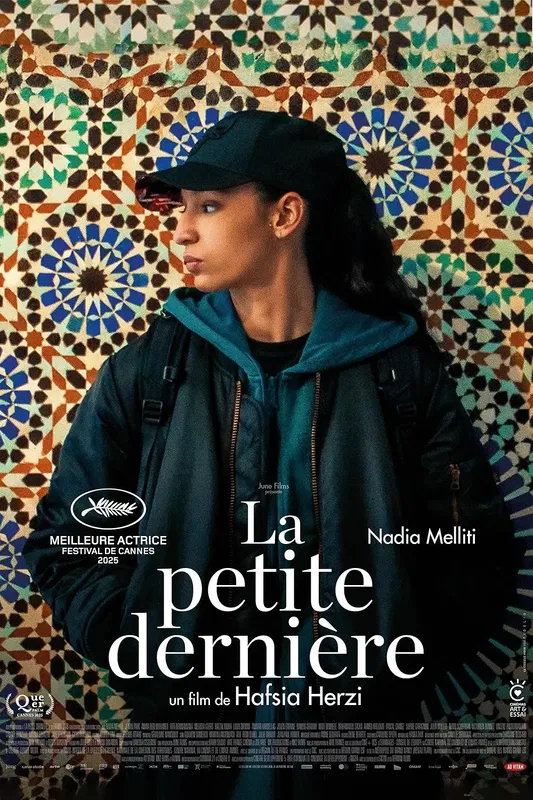
Hafsia Herzi brings Fatima Daas's autobiography to the big screen with a focus on sensitivity and truth. Lead actress Nadia Melliti is considered one of Europe's most promising talents. Detailed, simple, and authentic, Herzi's work invites the audience to reflect on female diversity.

by Gabriella Serravalle
In discussing "The Youngest One" (La petite dernière) by director Hafsia Herzi, distributed in Italy by Fandango, we must begin by mentioning the questionable decision by the Department of Cultural Activities Commission to ban the film for minors under the age of 14. Fandango remarked: "This censorship demonstrates our country's backwardness when it comes to the subject of psycho-affective and sexual education."
The Youngest One: A sentimental journey through sexuality and identity
In her third directorial outing, Hafsia Herzi—one of the actresses most appreciated by Abdellatif Kechiche—brings Fatima Daas’s autobiographical novel to the big screen, casting newcomer Nadia Melliti as Fatima. Her performance was so convincing that it earned her the Best Actress Award at Cannes.
The director returned to the Croisette after 2021's La Bonne Mère. Well-known to French audiences for her collaborations with Abdellatif Kechiche—she won the Marcello Mastroianni Award for Best Emerging Actress at the 2008 Venice Biennale for The Secret of the Grain (Cous Cous)—she delivers here an intense and delicate film about the narrative of female identity tout court.
The Youngest One is the story of Fatima, a young woman living near Paris, the center of her world. Her attraction to her own sex troubles her because she is surrounded by an environment where certain words are used as insults. Consequently, she pretends to love a boy while seeking out female company.
Fatima, the youngest of three sisters all dedicated to becoming "perfect brides," feels a deep conflict not only with the patriarchal environment but also with her Islamic faith, where she searches for answers that are slow to arrive, mediating between earthly love and devotion.
Fatima plays soccer and is the youngest in a family of Algerian immigrants settled in Clichy-sous-Bois, a multi-ethnic and contradictory Parisian banlieue.
In her final year of school, on the verge of starting university, she faces her homosexuality while remaining tied to her Muslim faith and conscious of the deep-rooted socio-political-cultural traditions of the Islamic community.
When Fatima leaves her close-knit suburban family to study philosophy in Paris, she finds herself trapped between her religious upbringing and the freedom of city student life.
There is an emblematic phrase that sums up the perspective suggested by the director: "A woman's instinct is to attract men." Chilling! These are the aberrant words spoken by the Imam Fatima turns to, speaking about herself in the third person to ask for advice without revealing the burning inner tumult that, in divine eyes, is considered an object of sin and abomination.
Inspired by the eponymous autobiography by Fatima Daas, the film that Franco-Tunisian actress and director Hafsia Herzi has written and directed follows fragments of the protagonist's life, relying entirely on the natural and expressive talent of newcomer Nadia Melliti.
Conclusions
Hafsia Herzi’s The Youngest One is a film of feelings, silences, glances, and themes. It explores the evolution of self-awareness and identity through the discovery of one's sexuality, touching upon religious and family contexts.
Comments
No comments yet. Be the first to comment!